President’s Comment – 5 Nov 17

DG George Weston Club Visit

What a great meeting last Wednesday with DG George and his wife Carol attending as well as PDG Gary Roberts and Assistant Governor Scott Kable. A total of 12 in attendance and only one member was an apology.

DG George spoke on his personal rewards from being a member of Rotary, the importance of the Club, its fellowship and having activities to involve members. Having the right mix for our members will help the club retain members and attract new members. He also spoke on the work of the Rotary Foundation and RAWCS. As well he spoke as the importance of connecting with the Youth in our communities and offering the activities and awards that will benefit them and our communities into the future.

The Board meeting held following the Governors presentation announced the success of our Membership Grant for $1,200 and the executive will be meeting this week to discuss the various ways we be using it to publicise our Club both in our communities and our Rotary District. Hopefully this will assist to increase our Club membership.

November is Rotary Foundation Month

I ask all members and other interested people in the community to consider their donation to the work of the Rotary Foundation by making their donation as below:

EFT Payments please make out to:

Account Name: The Rotary E-Club of District 9700 – Service/Projects,
Reference – Name plus ‘TRF’
BSB: 032769           Account: 697413

Cheque Payments by post make out to:    Rotary E-Club of District 9700-Serving Humanity

Reference – ‘TRF and your name’, and mail to:

Treasurer,
Rotary E-Club of District 9700-Serving Humanity, 
37 High St, YACKANDANDAH, VIC 3749

Just some of the work the Rotary Foundation Does

On the tracks of the Beast

In Mexico’s migrant shelters, a Rotary scholar puts his education into action

There are two inescapable elements of southern Mexico. 

The first is dust – desert rock ground to a powder that finds its way into your every crevice: the backs of your knees, the folds of your eyelids. You cough it up as you drift to sleep and discover its brume settled across your bedsheets in the morning.

The second element is violence.

I found both on the gritty tracks of the Beast.
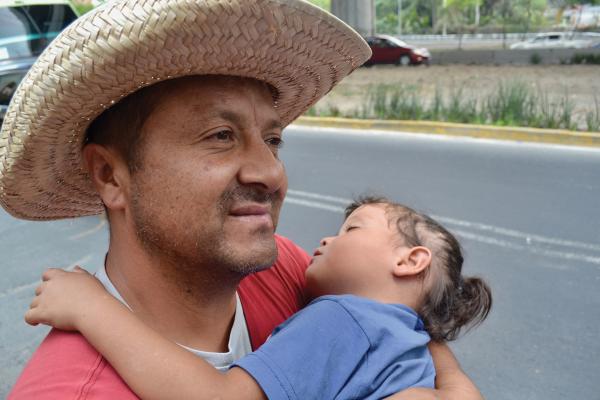
Among those apprehended at the U.S.-Mexican border between October 2015 and January 2016 were 24,616 families – the vast majority of them from Central America. 

Over the past half-century, millions of Central Americans have crossed Mexico from south to north, fleeing poverty, decades-long civil wars, and, most recently, brutal gangs. To escape, migrants used to ride atop the cars of the train line known as the Beast.

In July 2014, Mexican immigration officials announced a plan called the Southern Border Program; part of it entailed closing the Beast to migrants. Mexican President Enrique Peña Nieto said the plan would create new economic zones and safeguard migrants’ human rights by securing the country’s historically volatile southern border. Instead, the number of migrants beaten, kidnapped, and murdered has skyrocketed. Some have even been victims of the black-market trade in organs.

In early 2015 I had just completed my studies as a Rotary global grant scholar, earning a master’s degree in the anthropology of development. I had studied how trade and development initiatives in Mexico could make people’s lives more perilous, not less. To learn about what was going wrong, I went to southern Mexico to use the skills I had gained through my global grant studies.

Southern Mexico is poor and rural, made up of small pueblos and subsistence agriculture. In some ways, I felt at home. I grew up in rural Georgia, and I became interested in immigration after teaching English to farmworkers harvesting cabbage, berries, and Christmas trees in the foothills of North Carolina. Many of the men I worked with were from southern Mexico. Their descriptions of the violence brought by drug and human trafficking led to my interest in the region.
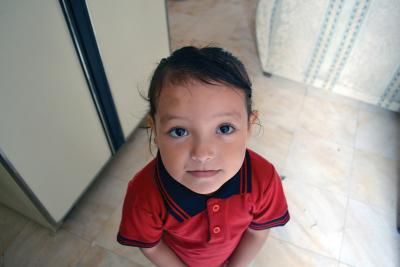
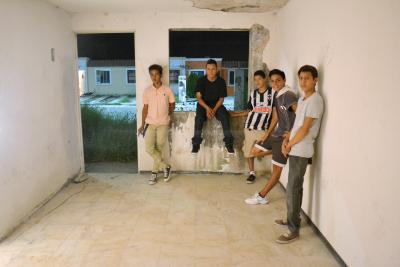
Shelters house migrants including children traveling with family members as well as young people on their own.

To understand how the Southern Border Program was affecting people’s lives, I stayed in migrant shelters, which are not unlike homeless shelters or temporary refugee camps. They are often without reliable running water or electricity, but they do provide migrants with a warm meal and a place to rest before they continue north. 

At first, shelter life was a shock to me. Sick or injured people arrived nearly each day. Severe dehydration was a big problem, and some people had literally walked the skin off the bottoms of their feet. I was there when a gang member entered the shelter to kidnap someone, but shelter directors stopped him.

By the time I arrived, shelters along the tracks of the Beast had seen the number of migrants dwindle from 400 a night to fewer than 100. Shelter directors explained that the number of Central Americans fleeing into Mexico each year – around 400,000 – had not fallen, but because immigration agents were now apprehending anyone near the Beast, people were afraid to approach the shelters. These safe havens had been transformed into no-go zones. “This is a humanitarian crisis on the scale of Syria,” one director said to me, “but no one is talking about it.”

In the shelters, I chopped firewood, cooked dinners, and scrubbed kitchen floors. I changed bandages and helped people file for asylum. And I lived and traveled with migrants headed north, recording their stories – about why they left, where they hoped to go, and what they had faced on their journeys.
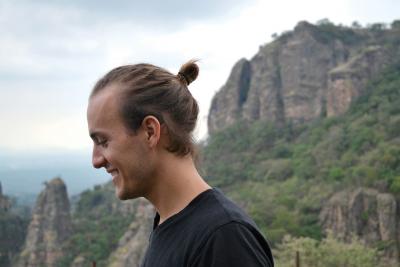
In 2015, shortly after finishing his studies as a Rotary Foundation global grant scholar, Levi Vonk went to Mexico to work with migrants. He has written about what he saw, and about the experiences of migrants themselves, for Rolling Stone, The Atlantic, and National Public Radio. For Rotary Foundation Month, we asked him to describe what he has done and learned. Vonk studied at the University of Sussex, England, sponsored by the Rotary clubs of Shoreham & Southwick, England, and Charleston Breakfast, S.C. His master’s degree in the anthropology of development and social transformation led to his becoming a 2014-15 Fulbright fellow to Mexico. He is now a doctoral candidate in medical anthropology at the University of California at Berkeley.

Mildred, a single mother of three, was fleeing gang members who threatened to kill her family if she didn’t pay them a protection fee. Ivan, the oldest brother of six, singlehandedly resettled his entire family in Mexico – including his elderly mother and his two toddler nephews – after hit men tried to kill them in their home in Honduras. Milton had lived in New York City for years – and had sheltered ash-covered pedestrians in his apartment during the 11 September 2001 terror attacks – before being deported. 

The things I learned were terrifying. Instead of shoring up Mexico’s borders, the plan had splintered traditional migrant routes. Those routes had been dangerous, but they were also ordered and visible. Migrants knew approximately which areas of the train passage were plagued by gangs. They were prepared to pay protection fees – generally between $5 and $20. They traveled in groups for safety. And they were often close to aid – a shelter, a Red Cross clinic, even a police station.

The Southern Border Program changed that. Hunted by immigration officers, migrants traveled deep into the jungle, walking for days. Gangs, which had previously extorted money from migrants, now followed them into these isolated areas to rob, kidnap, or simply kill them. 

The Southern Border Program has failed as a development initiative. Not only has cracking down on immigration made southern Mexico less safe, but the increased violence has deterred business investment that the region so desperately needs. 

During my time as a Rotary scholar, I learned to look at development differently. We often think of international aid in terms of poverty reduction, and we often see poverty reduction in terms of dollars spent and earned. The anthropology of development aims to analyze global aid in another way. We pay particular attention to how initiatives play out on the ground to determine just what local communities’ needs are and how those needs might be met sustainably and, eventually, autonomously. 
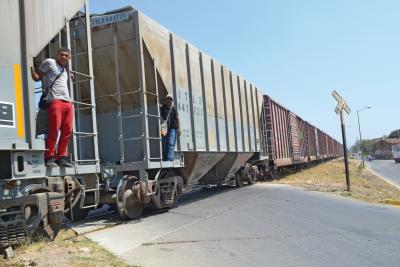
Axel Hernandez, whose parents brought him from Guatemala to the United States as an infant, has been deported twice; he now lives in Mexico. 

When I was living in migrant shelters, we often received huge, unsolicited shipments of clothing from well-intentioned organizations. Had they asked us, we would have told them that their efforts, and money, were wasted. In fact, directors had to pay for hundreds of pounds of clothing to be taken to the dump when space ran out at the shelter. 

Among the things shelters actually needed, I learned, were clean water, better plumbing, and medical care. But shelter directors did not just want these items shipped over in bulk; they needed infrastructure – water purification, functioning toilets, and access to a hospital, along with the skills and knowledge to maintain these systems themselves. 

Of course, as one shelter director told me, “Our ultimate goal is to not be needed at all – to solve this migration crisis and violence and go home.”

Rotary’s six areas of focus mesh neatly with these goals. Such measures require money, but more than that, they require in-tense cultural collaboration to make them sustainable. Who better than Rotary, with its worldwide network of business and community leaders, to understand the challenges and respond effectively? 

One way Rotary is responding is by funding graduate-level studies in one of the six areas of focus. After his global grant studies in anthropology of development at the University of Sussex, my friend Justin Hendrix spent several years working in a Romanian orphanage, helping to provide the children there with the best education possible. Another friend, Emily Williams, received a global grant to get her master’s degree at the Bartolome de las Casas Institute of Human Rights at Madrid’s Universidad Carlos III and now works with unaccompanied Central American minors and victims of trafficking in the United States. My partner, Atlee Webber, received a global grant to study migration and development at SOAS University of London (School of Oriental and African Studies); she now works as a program officer with the U.S. Committee for Refugees and Immigrants.

Rotarians understand that to have the most impact, we need to learn from other cultures. As global grant scholars, that’s what we aim to do – during our studies, and afterward.

President’s Comment – 8 Oct 17

Hi All,
What a great meeting last Tuesday with guest speaker Evan Burrell. Thank you Evan for your presentation the use of Facebook and his thought on promoting our Club. I would like to thank all who attended and hope we can apply some of the suggestions made by Evan. Our next Zoom meeting is scheduled for Wednesday 18th October at 7.30pm ESDT or 6.30pm EST with Rev. Mal Dunnett one of our own members as guest speaker, giving a presentation on his work on his RAWCS project, 9-2010-11: Community Development & Education Assistance, Santa Isabel, Solomon Islands.

The project aims to provide and build community training and vocational training centres in the Province of Santa Isabel. Assist in training to provide vocational education, leadership, PDHPE, drug/alcohol & youth development programs.

The article below is an interesting one on the difficult work of eradicating the last pockets of polio that are still left. It is encouraging that we are moving toward to our final goal of a polio free world.

Overcoming obstacles to polio eradication in Pakistan

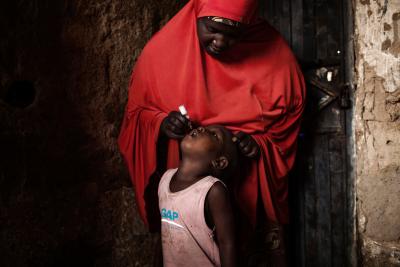
A Rotary volunteer administers polio drops to a child missed by earlier rounds in Pakistan.

“Coming together is a beginning. Keeping together is progress. Working together is success.”

Henry Ford

By Alina A. Visram, manager, Pakistan National PolioPlus Committee

When I first joined Pakistan’s PolioPlus Committee (PNPPC) as a manager close to eight years ago, polio eradication seemed within our reach. I used the opportunity to study poliomyelitis beyond just perceiving it as “a crippling disease.” I researched the causes and consequences; the types of polio virus; modes of prevention; and how elusive the virus can be given the right conditions.

Then in 2012, the dynamics of my country changed. We were faced with hostile militants, who refused to allow polio teams to vaccinate children in their territory. Our front line workers were regularly targeted for their work during campaigns.

Alina Visram bonds with the community in Pakistan.

Children were deprived of polio vaccine in several regions occupied by the militants making it inaccessible and hard to reach. Common myths and misconceptions were rife in most backward communities. Our biggest hurdle was “how do we change their mindset,” while they eyed us with suspicion and disdain.


We expanded our motley crew to a larger team. Together we worked closely with our polio partners to devise strategies and innovative approaches to overcome the odds; through placing Resource Centers in high risk districts; targeting nomads and Internally Displaced Persons (IDPs) through Permanent Transit Posts (PTPs); creating awareness in illiterate communities through speaking books; conducting workshops with enlightened religious clerics; and encouraging Rotary clubs to hold health camps in impoverished districts.

Meanwhile, polio cases spiraled across the country and in 2014 we reported over 300 cases of the wild poliovirus. In the years that followed, we worked with unwavering diligence and commitment in collaboration with the government of Pakistan to restrict polio transmission. Today, we have only five cases of polio stemming from the wild virus and only 11 globally, as of the end of September.

World Polio Day 24 October was established by Rotary International to commemorate the birth of Jonas Salk, who led the first team to develop a vaccine against poliomyelitis. It marks the long and arduous journey all endemic countries have struggled against, to eradicate polio.

The last mile is the hardest, but we are so close to the finish line.

President’s Comment – 1 Oct 17

Hi All,
A reminder of the ZOOM meeting to be held on Wednesday 4 October at 6.30pm EST or 7.30pm Eastern Summer Time.

The next meeting will be held on Tuesday 3rd October, 7.00pm – Eastern Summer Time – 6.00pm Queensland time. 

Our guest speaker will be Evan Burrell who is a Rotarian from the Rotary Club of Turramurra, D9685 who began his Rotary life as a Rotaractor. Evan is an amazing fellow who is passionate about Rotary and puts an amazing amount of effort into Public Image. I am sure you will find his enthusiasm contagious. Please join us and it would be nice if you could invite a guest. It is a great opportunity for them to understand Rotary and hear Evan speak of the value of Rotary and the humanitarian work that Rotary does.

Please note the different day, which was changed to suit Evan.

If you have a friend who wants to attend please let me know and I will ensure that they receive the email with the link to the meeting.

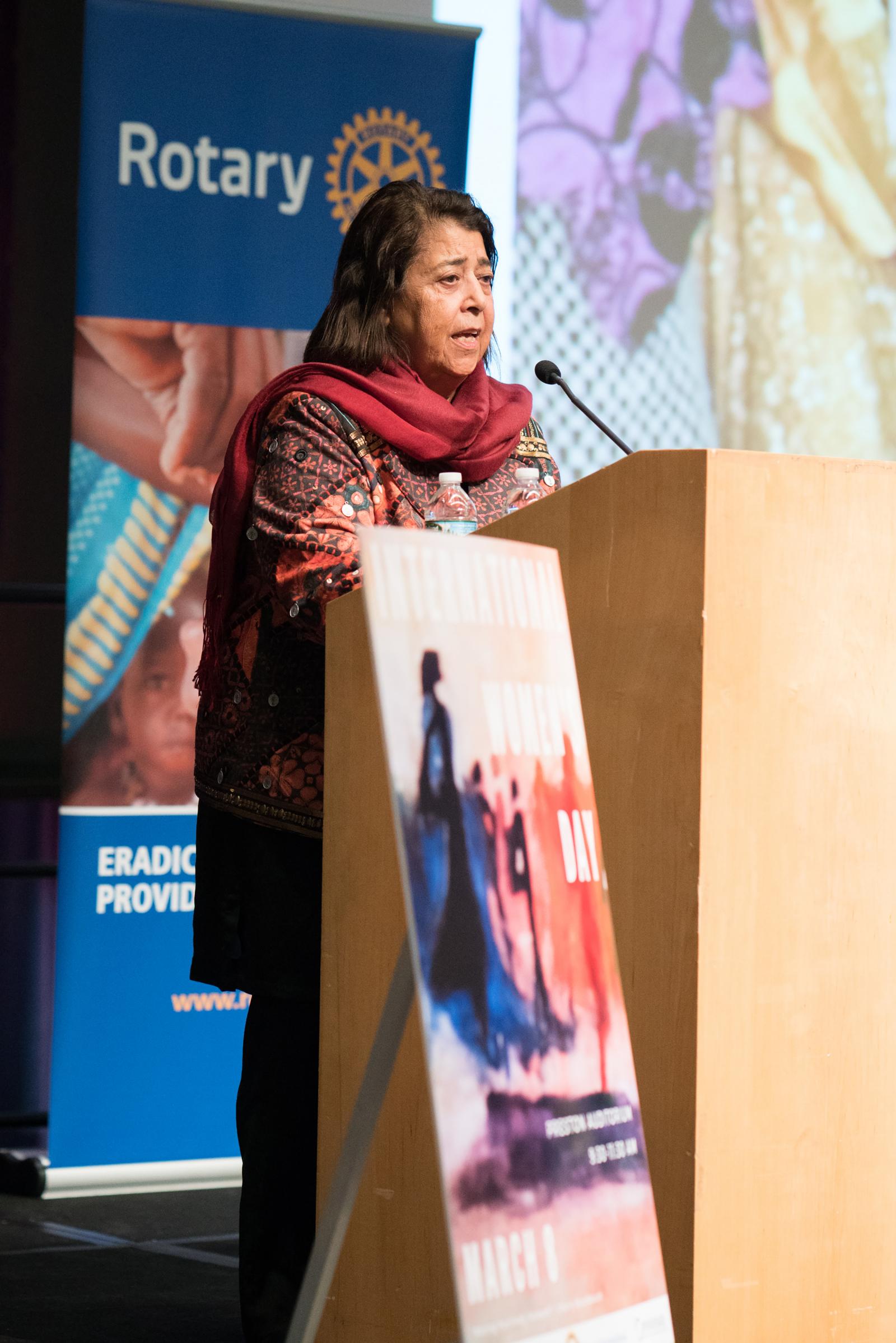
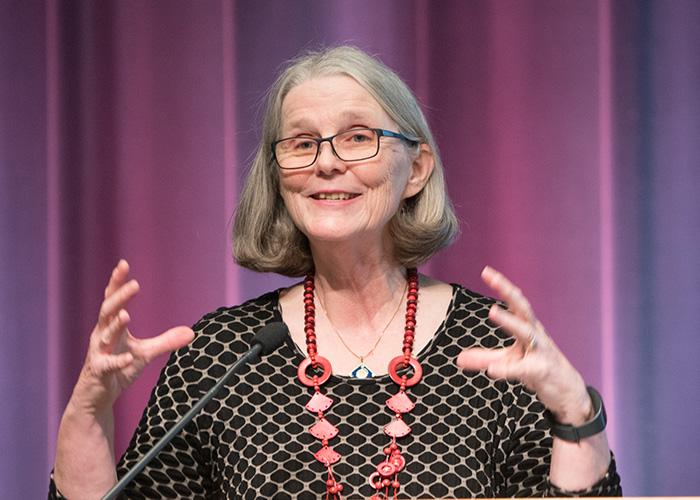
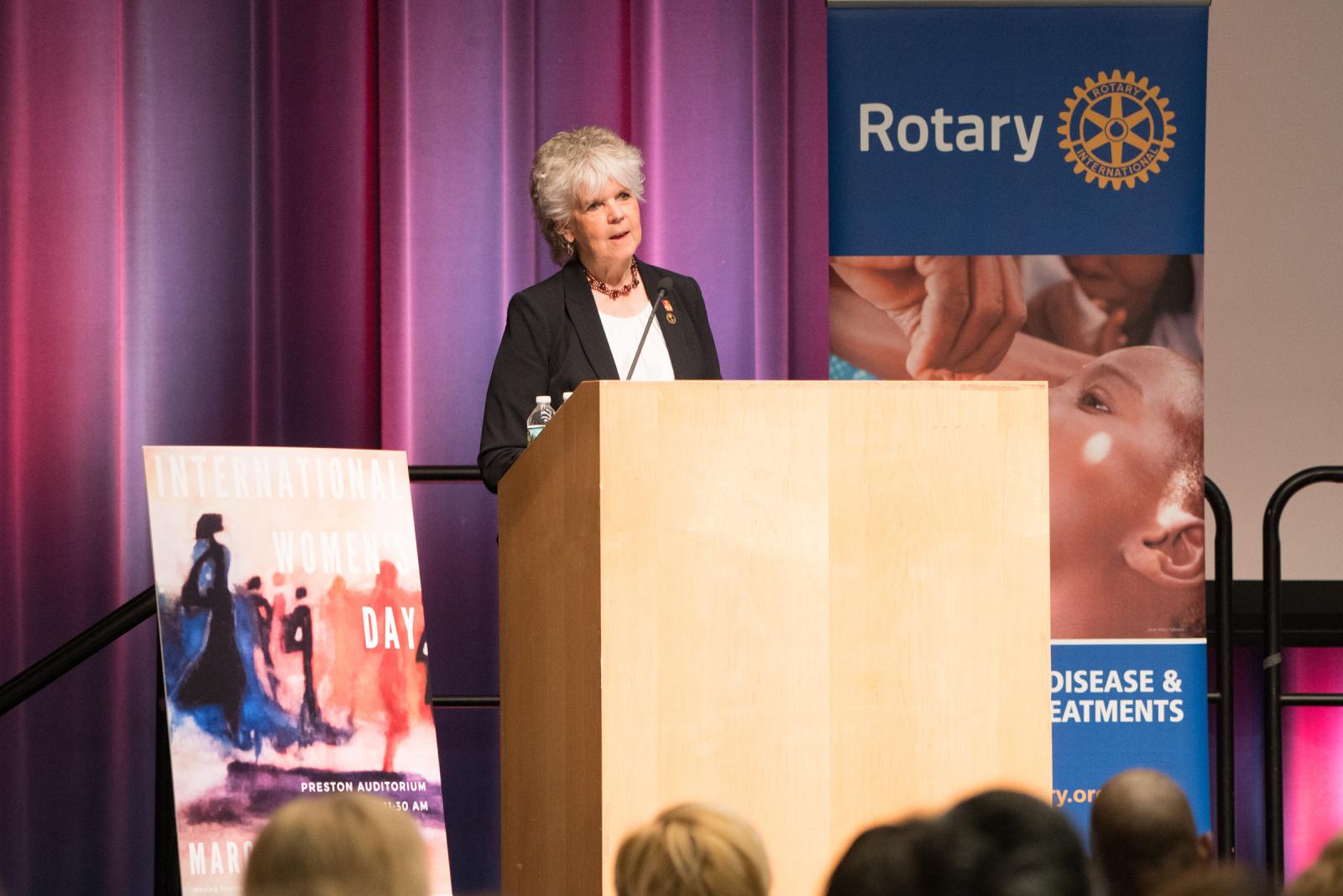
Women share stories of humanitarian service on International Women’s Day


What motivates everyday women to do extraordinary things — to positively change the lives of people halfway around the world while inspiring so many folks at home?

Razia Jan, the founder and director of the Zabuli Education Center, was honored on International Women’s Day.  

Three Rotary members answered that question at a celebration of International Women’s Day hosted by the World Bank at its Washington, D.C., headquarters 8 March. 

Speaking to an audience of more than 300, with thousands listening to the live-stream, Razia Jan, Deborah Walters, and Ann Lee Hussey told their personal stories and explained what inspired them to build a girls school in Afghanistan, assist people living in a Guatemala City garbage dump, and lead more than 24 teams to immunize children in Africa and Asia.

“I’m so inspired to see the faces of the children, what they’re learning, how to stand up for their rights, to have ambition … to want to do things that may even be impossible — to have dreams,” said Jan, a member of the Rotary Club of Duxbury, Massachusetts, USA. 

An Afghan native now living in the United States, Jan has worked for decades to build connections between Afghans and Americans while improving the lives of young women and girls in Afghanistan.

Founder and director of the Zabuli Education Center, a school that serves more than 625 girls in Deh’Subz, Afghanistan, Jan said the first class of students graduated in 2015 and a women’s college will open soon. 

Dr. Deborah Walters, a member of the Rotary Club of Unity, was honored by the World Bank at International Women’s Day.  

The girls school teaches math, English, science, and technology, along with practical skills to prepare them to achieve economic freedom within a challenging social environment.

 Walters, a neuroscientist and member of the Rotary Club of Unity, Maine, USA, has served as a volunteer for Safe Passage (Camino Seguro), a nonprofit organization that provides educational and social services to children and families who live in a Guatemala City garbage dump.

Walters, known as the “kayaking grandmother,” traveled from her home in Maine to Guatemala in a small kayak to raise awareness of the plight of the residents.

Hussey, a member of the Rotary Club of Portland Sunrise, Maine, has made the eradication of polio and the alleviation of suffering by polio survivors her life’s work.

A polio survivor herself, she’s spent the past 14 years leading teams of Rotary volunteers to developing countries to immunize children during National Immunization Days.

Ann Lee Hussey was honored for her lifelong work in polio eradication.

She often chooses to lead or participate in NIDs in places that don’t often see Westerners: Bangladesh, Chad, Mali, Niger, Nigeria, and remote areas of Egypt and India. There, the need is greatest, and the publicity and goodwill that the trips foster are critical in communicating the urgency of the need for immunizations.

“These women exemplify what the World Bank is striving to attain every day with the twin goals of ending extreme poverty within a generation and boosting shared prosperity,” said Daniel Sellen, chair of the World Bank Group Staff Association. “They illustrate the power of women to change the world and improve people’s lives through innovative and impactful projects in education, economic development, and health.”

President’s Comment – 23 Sep 17

Hi All,

We had a great social meeting last Wednesday with four members attending.

The next meeting will be held on:

 Tuesday 3rd October, 7.00pm – Eastern Summer Time – 6.00pm Queensland time. 

Our guest speaker will be Evan Burrell who is a Rotarian from the Rotary Club of Turramurra, D9685 who began his Rotary life as a Rotaractor. Evan is an amazing fellow who is passionate about Rotary and puts an amazing amount of effort into Public Image. I am sure you will find his enthusiasm contagious. Please join us and it would be nice if you could invite a guest. It is a great opportunity for them to understand Rotary and hear Evan speak of the value of Rotary and the humanitarian work that Rotary does.

Please note the different day, which was changed to suit Evan.

If you have a friend who wants to attend please let me know and I will ensure that they receive the email with the link to the meeting.

If you have a friend who wants to attend please let me know and I will ensure that they receive the email with the link to the meeting.


5 things you might not know about ending polio 

The road to eradicating polio has been a long and difficult one, with Rotary leading the fight since 1985. Going from nearly 350,000 cases in 1988 to just 10 so far this year has required time, money, dedication, and innovation from thousands of people who are working to end the disease. 

Here are five things you may not know about the fight to end polio:

1. Ice cream factories in Syria are helping by freezing the ice packs that health workers use to keep the polio vaccine cold during immunization campaigns.

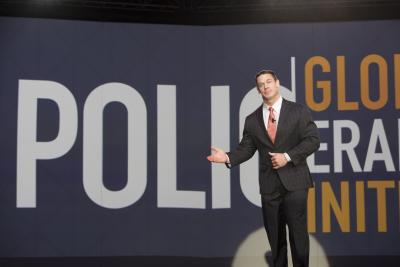
John Cena

2. Celebrities have become ambassadors in our fight to end the disease. 

They include WWE wrestling superstar John Cena, actress Kristen Bell, action-movie star Jackie Chan, golf legend Jack Nicklaus, Grammy Award-winning singers Angelique Kidjo and Ziggy Marley, Nobel Peace Prize laureate Desmond Tutu, anthropologist Dr. Jane Goodall, co-founder of the Bill & Melinda Gates Foundation Bill Gates, and world-renowned violinist and polio survivor Itzhak Perlman.

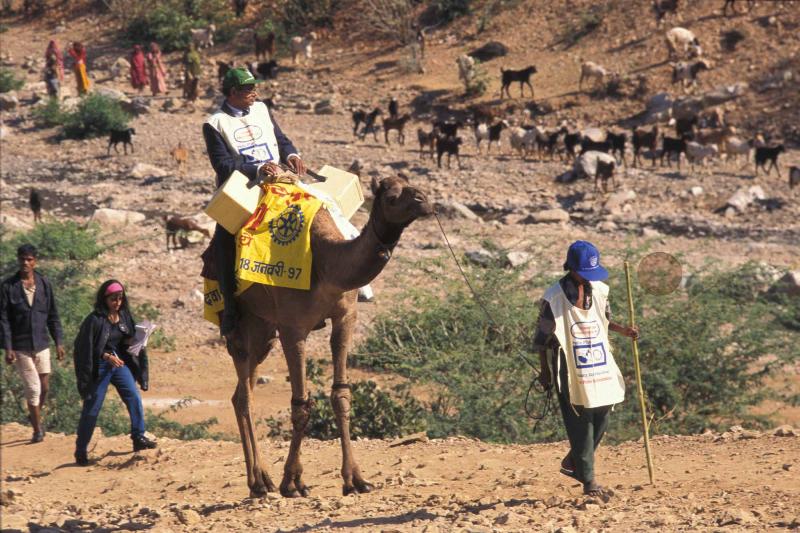
3. Health workers and Rotary volunteers have climbed mountains, crossed deserts, and sailed to remote islands, risking their lives to vaccinate children against this disease. Rotary has funded more than 1,500 motorbikes and 6,700 other vehicles, as well as 17 boats, to make those journeys. Vaccinators have even traveled on the backs of elephants, donkeys, and camels to immunize children in remote areas.

4. In Pakistan, the polio program emphasizes hiring local female vaccinators and monitors. More than 21,000 vaccinators, 83 percent of whom are women, are achieving the highest immunization coverage rates in the country’s history.

5. Thanks to the efforts of Rotary and its partners, more than 16 million people who otherwise might have been paralyzed are walking today. In all, more than 2.5 billion children have been vaccinated since 1988.


Watch World Polio Day on 24 October

Learn more

President’s Comment – 3 Sep 17

Reminder of Zoom Meeting to be held next Wednesday, 6th September at 7.30pm

Dr Luc, the Director of the Mission in Health Care and Development, Democratic Republic of Congo will be speaking about his work in the Congo regarding women, children, and medial aid.

I am sure your guests will find Dr Luc inspirational, and I look forward to you hearing about his work in the DRC. It is a great opportunity to introduce interested people to Rotary and particularly the e-club movement.  

if you have any guest who wishes to attend please email me with their email address so that I can send the email with the link to the meeting. –  johnroberson@bigpond.com 

Australian Rotary Health

Australian Rotary Health has established a new programme that will run alongside Hat Day.  Lift the Lid on Mental Illness Celebrating Hat Day  – October 10

For more information open this link: https://australianrotaryhealth.org.au/

Australian Rotary Health is one of the largest independent funders of mental health research within Australia.

We also provide funding into a broad range of general health areas, provide scholarships for rural medical and nursing students, as well as Indigenous health students. Australian Rotary Health provides funding into areas of health that do not readily attract funding, and promotes findings to the community.

Australian Rotary Health is a project of the Rotary Districts of Australia and is supported by Rotary Clubs.  We have a broad vision to improve the health and well being of all Australians.

Click here to 


President’s Comment – 13 Aug 17

Greetings from GeralDlton, Western Australia

Carolyn and I have been here to support Carolyn’s daughter, Katherine after the birth of her daughter last Monday 7th August. 

I took the opportunity to attend the Rotary Club of Geraldton meeting held Wednesday 9th. It just happened to be the District Governor’s visit  with a well attended meeting. It was good to meet up with DG Lindsay Dry, who I had previously at the RAWCS AGM at Penrith last year.

I also had a talk with PP Di Gilleland from the Geraldton Club, who is Deputy Project Manager of RAWCS Project 5 of 2011-12, Indigenous Education Foundation of Tanzania – Orkeeswa Secondary School (WR-006-2011). This is the project that is now sponsored by our E-Club with Sharon Daishe as project Manager.

The article below is an important message for our work in the world.


Why education changes the world

Posted on 

Isma Seetal, middle left of banner, as a team assistant during District 5320’s Rotary Youth Leadership Awards event.

By Isma Seetal, Rotary Global Grant Scholar

“Education is the best way to change one’s standard of living.”

My mother would repeat this phrase over and over. I was lucky to have been brought up by a hard-working, single, mother, who empowered my brother and me to climb the socio-economic ladder by giving us the best education she possibly could. Other children from broken families like mine did not have the same fortune. My unwavering drive to give back and improve my community led me to join the Rotaract club of Port-Louis, Mauritius in July 2012. 

Isma Seetal, right, and Jerry Rekers, a past president of the Newport-Irvine Rotary Club, her host club.

“Driiiing! Driiing!”  My alarm rang out on a Saturday morning. My mind and body knew it was the weekend, and ganged up on me so that I had to crawl sluggishly out of bed. But the reason for my early wake-up soon dawned on me. It was the day of Lolo’s follow-up doctor’s appointment.

Lolo is an eight-year-old boy, living in a poverty-stricken area of the island, whom I had met during a health-related Rotaract project. His mother was convinced that he was suffering from cognitive disabilities, which she blamed for his poor grades, and for the fact that he was constantly bullied at school. However, the diagnosis the doctor gave us that day was different from what the mother had thought: hearing impairment. Lolo was not mentally challenged. He just couldn’t hear properly!

Many doctor appointments later, I visited Lolo. My heart filled up as he ran up to my friend and me, sporting the widest smile. Thanks to a hearing device, Lolo could now hear his teachers in class. He had changed from a sullen, withdrawn little boy, to a cheerful child with glowing and hopeful eyes. I discovered a passion: community service. I went on to become a Rotaract board member and then the president of the club in 2013-14.

Through this project and many others, it became increasingly clear to me that the reason there were so many children roaming the streets was much more complex than I had thought. Some are the dropouts of an archaic education system, others are the victims of poverty and abuse, yet others are caught in their parents’ web of drugs and alcoholism.

Back then, during one of the long discussions I had with my husband-to-be about the societal ills which continue to pervade our country, we came to one conclusion: we needed to build our skills and knowledge further to make a difference on an even larger scale. Though I am from a small island of 1.3  million, thanks to a Rotary global grant, I am now studying in California for a doctorate in Educational Leadership, gorging on new knowledge and making the best of the international exposure. I am delving more into educational reforms and the principles of leadership, and I am eager to return to my country to bring about positive changes in education.

I continue to volunteer here for the Newport-Irvine Rotary Club, my hosts. The ties with Rotary are life-long! Long live Rotary!