President’s Comment – 4 Dec 16

cropped-club-logo-transparent2.png

DID YOU KNOW 

The roots of Rotary’s representative network actually predate the formal chartering of the UN after World War II. In 1942, Rotary clubs from 21 nations organized a conference in London attended by ministers of education to develop ideas for advancing education, science, and culture across nations. This meeting was the impetus for what is known today as — the UN Educational, Scientific, and Cultural Organization.

Delegations of Rotary members helped draft the UN Charter in San Francisco in 1945 and gave the organization strong support during its early years, until the Cold War turned it into an ideological battleground. Rotary’s participation decreased over the following decades in keeping with its policy against political involvement.

The spark that restored Rotary’s interest in the UN was the launch of the campaign to in 1985, and the ensuing partnership with the World Health Organization and UNICEF.

“With the advent of PolioPlus [Rotary’s campaign against polio], it became very important to re-establish our presence,” says Jenkins.

In 1945, representatives of 50 countries met in San Francisco at the United Nations Conference on International Organization to draw up the United Nations Charter. Those delegates deliberated on the basis of proposals worked out by the representatives of China, the Soviet Union, the United Kingdom and the United States at Dumbarton Oaks, United States in August-October 1944. The Charter was signed on 26 June 1945 by the representatives of the 50 countries. Poland, which was not represented at the Conference, signed it later and became one of the original 51 Member States. The United Nations officially came into existence on 24 October 1945, when the Charter had been ratified by China, France, the Soviet Union, the United Kingdom, the United States and by a majority of other signatories. United Nations Day is celebrated on 24 October each year.

ROTARY-UN CELEBRATION MIXES BUSINESS WITH DIPLOMACY

The Rotary Responsible Business honorees are, from left: Jean-Paul Faure, Stephanie Woollard, Mercantil Banco Universal representative Luis Calvo Blesa, Larry Wright, Annemarie Mostert, Suresh Goklaney, and Coca-Cola Pakistan representative Fahad Qadir. (Not pictured: Juan Silva Beauperthuy.)
Photo Credit: Monika Lozinska/Rotary International

Outside the United Nations building in midtown Manhattan stands an imposing sculpture of a man wielding a sword in one hand and raising a hammer with the other. It reflects a shared goal that Rotary and the United Nations celebrated at the organizations’ annual meeting on Saturday, 12 November: to use our strengths and tools to build a more peaceful and just world.

The theme of this year’s Rotary Day at the United Nations, “Responsible Business, Resilient Societies,” emphasizes Rotary’s role as a global network of business leaders using the tools of their trades to build stronger, more prosperous communities.

In his introductory remarks, Rotary International President John F. Germ drew the crowd’s attention to the statue, “Let Us Beat Our Swords Into Ploughshares,” as he set the tone for the day, which included breakout sessions and keynote addresses on aspects of responsible business, or the philosophy that for-profit enterprise can contribute to positive social and economic development.

“Here is where the UN and Rotary International are working side by side, equipping communities with the tools they need, and empowering them with the will to use those tools far and wide,” he said.

Per Saxegaard, founder and chairman of the Oslo-based Business for Peace Foundation, gave a keynote address on the complex relationship between business and broader society, marked by both tension and opportunity. Despite the perception that profit alone motivates enterprise, he says, commercial success and social progress are closely intertwined.

“Societal needs define markets,” he said. “I have met many entrepreneurs in my career, and they all have one thing in common: They see a problem, and they say ‘I can fix that, and I can do it cheaper and better.’ That is the engine of innovation in business. We need that energy to solve the problems at hand,” such as hunger or illiteracy. He pointed to the Sustainable Development Goals, the UN’s ambitious roadmap for eliminating poverty by 2030 and highlighted the opportunity for businesses to help achieve them.

Other speakers included UN Under Secretary-General and High Representative for Disarmament Affairs Kim Won-soo and UNICEF polio chief Reza Houssaini, who provided an update on the polio eradication campaign.

John Hewko, general secretary of Rotary International, introduced eight Rotary Responsible Business honorees, six individuals and two corporate partners whose inclusive business practices are bringing employment, mentoring, education, and innovation to their communities.

The individuals honored were:

  • Juan Silva Beauperthuy, Rotary Club of Chacao, Venezuela: For 25 years, Beauperthuy has helped keep disadvantaged youths on the right track through Queremos Graduarnos, an education program focused on mentoring and skill development, with support from his engineering firm. Today, the program serves more than 700 students in 18 schools.
  • Jean-Paul Faure, Rotary Club of Cagnes-Grimaldi, France: To encourage young professionals and provide promising new businesses with training and funding, Faure launched a business contest called Le Trophée du Rotary. Now in its seventh year, the program has drawn support from a major bank and has kept past participants involved as mentors.
  • Suresh Goklaney, Rotary Club of Bombay, India: Goklaney, executive vice chair of a large manufacturer of UV water purification systems, has led efforts to provide clean water in rural villages and impoverished urban areas throughout India. The project has also established centers where local women can sell clean water to generate income.
  • Annemarie Mostert, Rotary Club of Southern Africa, South Africa: Mostert formed Sesego Cares, a Johannesburg-based nonprofit, in 2005 to offer education and job training, and to teach entrepreneurship and leadership development to women and children. She also worked with TOMS Shoes to provide 1.3 million pairs of its shoes to the country’s poor.
  • Stephanie Woollard, Rotary Club of Melbourne, Victoria, Australia: After meeting seven illiterate craftspeople during a visit to Nepal, Woollard founded Seven Women to help Nepalese women make products to sell abroad. The program, which has trained and employed more than 1,000 women in the past decade, also teaches basic bookkeeping and computer skills.
  • Larry Wright, Rotary Club of Taylor, Michigan, USA: A master gardener, Wright started his landscaping business with a bank loan in the 1970s. In 2013, he led an effort to adapt a microfinance model that had succeeded abroad to offer microloans, business classes, and mentorship to entrepreneurs in Detroit.

The business partners honored were:

  • Coca-Cola Pakistan has supported the Rotary Pakistan National PolioPlus Charitable Trust since 2010 to promote polio prevention and awareness, particularly through publicity and projects to provide clean water, in one of the few countries where polio remains endemic.
  • Mercantil Banco Universal supports a project that has trained 6,000 students in 40 universities across Venezuela in social responsibility and leadership, with the goal of encouraging students to use their academic knowledge to respond to the challenges of underserved communities.

In the afternoon, Rotary member Devin Thorpe spoke about the intersection of profit and purpose. Infusing a corporate program with a sense of social purpose pays off, he says, because it breeds loyalty and satisfaction among both customers and employees.

“When a purpose program is profitable, there is no limit to the good that can come from it,” he said. “Corporations are made up of people. We in this room bear the responsibility to shape corporate behavior, it is up to each one of us.”

Watch video coverage of the event on .

Rotary news

12-Nov-2016

President’s Comment – 27 Nov 16

Club Logo - Transparent

Next GoTOMEETING – Wednesday 14th December 

7.30pm NSW & VIC Time

At this meeting we need to elect a President Elect for 2018-19 and Nominee for 2019-20. We also need to adopt a slightly changed Constitution & Bylaws to conform NSW Incorporation law and with RI requirements.

This article below is a reminder to all who conduct overseas projects to consult and work with the community they are assisting. Some very sound advice.

It’s not “your” project

161115_tusu_headsht2

By Dr. Francis “Tusu” Tusubira, a member of the Rotary Club of Kampala-North, Uganda


How many times do we hear Rotary members say, “we have our project in Kireberebe Kisunkaana?”

Let us get one thing right when dealing with economic and community development. And I will call this lesson one: it is not YOUR project.

It is a community project that you are supporting. Along these lines, I thought sharing a few experiential lessons is not a bad idea.

Lesson two: A community where disease is a challenge will lose so much time being sick that they cannot focus usefully on any other initiative that will help them develop. You cannot address economic and community development if you have not addressed basic health.

Lesson three: A community that does not have clean water, and which does not understand the relationship between “dirty water” and disease will have resultant health challenges: diarrhea, eye diseases, cholera, etc. You might as well have a comprehensive Water, Health, and Sanitation component as part of your project.

Lesson four: We all know that illiteracy can be a major barrier, if not a full block, to any efforts related to development. This really means economic and community development must also look at the literacy and numeracy environment (along with the ability to interpret, create linkages, and apply what is read to personal empowerment and development).

Lesson five: Poverty is state of mind. If you do not address the mindset of those that have accepted poverty as their lot, all the rest is a waste of time. This is an intangible challenge and the solution must be in addressing the mind.

When the ground is fertile in terms of the elements above, enablers like skills development (chances are that these will relate to agriculture and other income generating opportunities in rural communities) can be introduced. Or all the elements can move simultaneously to create synergy. Microcredit, for example, is an enabler, not a solution. One realizes soon on in life (if one is lucky) that money is never a solution. Giving money to the poor does not make them rich: it makes them poor people with some transient cash.

What is clear is that in all the above, dedicated expertise will be required. So will partners with knowledge and experience in handling the different aspects. Cooperating organizations are now recognized as one of the key features of sustainable economic and community development. This does not mean Rotary members do nothing; they must also dig in and apply their skills. But being a Rotarian is not a full time job so we need a helping expert hand.

So you see, economic and community development is a totality approach, not a one-dimensional intervention. Which leads to one last lesson:

Lesson six: It is not the things we give to or put in communities that create sustainability. It is what the community does in response to what we do as Rotary members.

This is behavioral change. We are just catalysts, not part of the reaction. It is NOT our project. It is THEIR project. Lesson six is not so much a lesson, actually, as a truism.

Adapted with permission from the Rotary District 9211 bulletin, The Wave.

President’s Comment – 20 Nov 16

Club Logo - Transparent

Annual General Meeting

Thank you to those who attended the Rotary E-club of District 9700-Serving Humanity AGM last Tuesday 15th November. The Minutes will be posted in the members section soon.  The new Club Constitution and Bylaws will be adopted at the next meeting as they require amendment. The meeting decided that the current executive would remain in office for one more year as we are new to the concept of an E-club and need to develop the potential of our Club. We also need to attract more members to be a viable Club.

It was resolved to hold our Board Meetings by GoToMeeting on the first Wednesday each month at 7.30pm ESDT, however the next one will have to be the second week in December as I will be away on the first Wednesday. 

Those elected for the 2017-18 year are:

President 2017-18                   John Roberson

Vice President                      To be elected next meeting

President Elect 2018-19             To be elected next meeting

President Nominee 2019-20           To be elected next meeting

Secretary                           Debbie Schache

Treasurer                           Marilyn Roberts

Directors:
Admin                               Cameron McKern 
Foundation                          Ruth Barber                                                   
Membership                          Malcolm Dunnett
Public Relations                    Marilyn Roberts
International Service               Sharon Daishe
Youth & Australian Service          Lauren Slater
 
Other member committee positions are:
Membership                          Donna Vaughan
International Service               Kate Bowyer
Youth & Australian Service          Jemma Hayward

The positions for President Elect and Nominee must be filled by the end of December as Rotary International require the names for those positions by then. Please consider your commitment and let me know if you can see your way to accepting one of them.  Our Club needs them filled to remain viable.

Remaining positions to be elected at Meeting, to be held Wednesday 14th December at 7.30pm NSW/VIC time.

 Rotary Foundation named World’s Outstanding Foundation for 2016

Photo Credit: Rotary International/Alyce Henson

The has recognized The Rotary Foundation with its annual Award for Outstanding Foundation.

The award honors organizations that show philanthropic commitment and leadership through financial support, innovation, encouragement of others, and involvement in public affairs. Some of the boldest names in American giving — Kellogg, Komen, and MacArthur, among others —are past honorees.

“We are honored to receive this recognition from the AFP, which gives us even more reason to celebrate during our Foundation’s centennial year,” says Rotary Foundation Trustee Chair Kalyan Banerjee. “The continued strong support of Rotary members will help us keep our promise of a polio-free world for all children and enable the Foundation to carry out its mission of advancing world understanding, goodwill, and peace. We look forward to another 100 years of Rotary members taking action to make communities better around the world.”

The announcement came on 15 November, known to industry professionals since the 1980s as National Philanthropy Day. The award will be presented in early 2017 at the AFP’s annual conference in San Francisco.

Rotary Foundation Trustee Chair-elect Paul Netzel is set to accept the award on Rotary’s behalf, and Eric Schmelling, director of fund development at Rotary, will speak at the conference. The event is expected to draw more than 3,400 senior-level fundraising professionals from 33 countries.

“While almost everyone is familiar with Rotary, not everyone may realize just how much of an impact Rotary and The Rotary Foundation have had on countless people and communities across the globe,” says Jason Lee, AFP president and CEO. “On behalf of the entire charitable sector and people around the world, all of us at AFP are honored to be able to recognize The Rotary Foundation as our 2016 Outstanding Foundation.”

AFP’s committee of judges cited Rotary’s comprehensive campaign to eradicate polio as a major driver of the selection. They also mentioned that Rotary applies a methodical, purposeful approach to support a wide variety of causes, from providing clean water to educating the next generation of peace professionals.

Rotary News

15-Nov-2016

President’s Comment – 13 Nov 16

trf_rgb


november is foundation Month

“We should not live for ourselves alone, but for the joy in doing good for others.” – Arch Klumph, founder of The Rotary Foundation

The mission of The Rotary Foundation is to enable Rotarians to advance world understanding, goodwill, and peace through the improvement of health, the support of education, and the alleviation of poverty. 

The Rotary Foundation helps fund our humanitarian activities, from local service projects to global initiatives. Your club or district can apply for grants from the Foundation to invest in projects and provide scholarships. The Foundation also leads the charge on worldwide Rotary campaigns such as and . Rotarians and friends of Rotary support the Foundation’s work through voluntary .

The Rotary Foundation transforms your gifts into projects that change lives both close to home and around the world. As the charitable arm of Rotary, we tap into a global network of Rotarians who invest their time, money, and expertise into , such as and . Foundation empower Rotarians to approach challenges such as poverty, illiteracy, and malnutrition with sustainable solutions that leave a lasting impact.

Strong , a stellar , and a unique mean that we make the very most of your contribution. and become a part of Rotary’s life-changing work!

Since the first donation of $26.50 in 1917, the Foundation has received contributions totaling more than $1 billion.

All Rotarians are asked to contribute to our Foundation each year. You can rest assured that your donation will be used for a good purpose.

You can make your donation directly through My Rotary or on this website to our Club Service Account by direct deposit and our Treasurer Marilyn will forward it to the Rotary Foundation on your behalf. The account details are on the Treasurer’s Page under Members.

You will  be issued with a tax deductible receipt from the Rotary Foundation.

President’s Comment – 6 Nov 16

REMINDEr – Next Tuesday 15th October is the AGM of our E-CLUB of D9700 serving Humanity at 7.00pm ESDT

An invitational email will be sent to all members today as well as Assistant Governor Michael Horth and our new member Kate Bowyer who has a RAWCS project operating in Tanzania.

return home after visit to the Solomon Islands

I apologise for the delay in my post this week as communications in the Solomon Islands is difficult due to the high number of users on Wifi and Global Roaming costs.

However PP Richard Pottie and I have returned home enthusiastic about the projects that we have organised for May next year. I will tell you more on this soon.

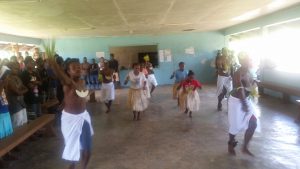
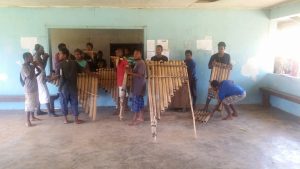
The pictures below are part of our welcome to Garanga Vocational Training Centre, Santa Isabel where we plan to build a mechanical engineering workshop.

20161101_100136

Students dance for us

20161101_105425

Student Pan Pipe Band


President’s Comment – 30 Oct 16


Solomon island RAWCS trip

This week PP Richard Pottie from the Rotary Club of Wagga Wagga Kooringal and I have travelled to Santa Isabel, Solomon Islands to plan for some hands on teams that will travel to here during 2017.

Anyone who is interest in working on a team should contact me and register their interest. We are still requiring more funding so that all the work can be completed. All donations welcome at RAWCS Project 9-2009-10 on this website under International.


When I give to Rotary, I get so much more back

By Stephanie Witkowski, Rotary Club of Honolulu Pau Hana

At 28 years old, I decided to become a Rotarian, because Rotary changed my life.

I grew up in a small town in Oregon, USA, and was a young leader in my school. When I was 15 years old, I applied to attend a Rotary Youth Leadership Awards event in Rotary’s District 5110 to learn more about myself and what leadership meant to me. During that amazing week-long experience, I learned not only about how to be a better leader for my school and community, but about Rotary itself.

One of the things I learned about Rotary was the organization’s commitment to international service through the Rotary Youth Exchange program. I had always dreamed of learning about another culture through an international experience with students my age. So when I was 17 years old, I applied to be a Rotary Youth Exchange student. In District 5110, they have a wonderful tradition of selecting the student’s host country for them, and then SURPRISE! In 2005, I was off for a life-changing year in Slovakia.

Most students who have the incredible opportunity to study abroad speak of the experience as a pivotal moment in their life. That was certainly the case for me. While living with a host family, and studying at the local high school, I learned so much more about what it meant to be a global citizen and what my goals for my life were.

During this year, I began to appreciate different cultures and languages and what they offer to our world as a whole. This path over time led to a BA in cross-cultural communication, a Fulbright Teaching Assistant in Slovakia at age 23, followed by three years of graduate study in linguistics. My Rotary Youth Exchange experience set me on a path toward my current career (as a revitalization linguist for a Native American Tribe.)

During my educational and professional pursuits, I always kept my connection to Rotary. In summers during college, I served as a RYLA camp counselor. I wanted to give back to the next generation of young leaders and inspire them. But the truth is, I always came away as inspired by the youth and their commitment to Service Above Self.

Finally, this May, I joined Rotary to once again give back to an organization that gave so much to me. But again, I find that when I give to Rotary, I end up receiving so much more.